
mifblender
io.github.mifsopo1/mifblender
AI in a running Blender: 437 typed tools that check their parameters and read the result back.
Documentation
MifBlender
Your AI assistant, working inside a running Blender.
437 typed tools for modeling, materials, UVs, rigging, animation, physics, geometry nodes and rendering.
Each one checks its parameters, does the work on Blender's main thread and reads the result back.




Start in one line
With uv installed and Blender closed:
uvx mifblender-mcp setup
It finds your Blender installs and AI apps, shows what it will do and asks first. Then it installs and enables the add-on, and adds MifBlender to the apps you pick. Restart your AI app, open Blender, and ask:
Call bl_status, then add a rounded cube with a brushed metal material and render a preview.
Free for any use, including commercial work. No account. Everything runs on your computer.
See what it can do
Smash Cut: a game's models, from a game jam
Smash Cut is a monster game made in four days for a game jam, with Claude Code
agents as the build team. Every monster, vehicle, building and prop in it was built in Blender through MifBlender:
2.15 million logged calls, and no 3D, image or texture generator. Most shapes were written as Python and placed in the
scene with create_mesh; MifBlender then remeshed, unwrapped, shaded, baked, rigged, keyed, rendered and exported them.
The monsters were modelled against concept sheets made with an AI image generator, used as reference only.
Each strip below shows the final render, the wireframe and the clay view.
| Pangoliath | Rust Bucket | Frost Titan |
|---|---|---|
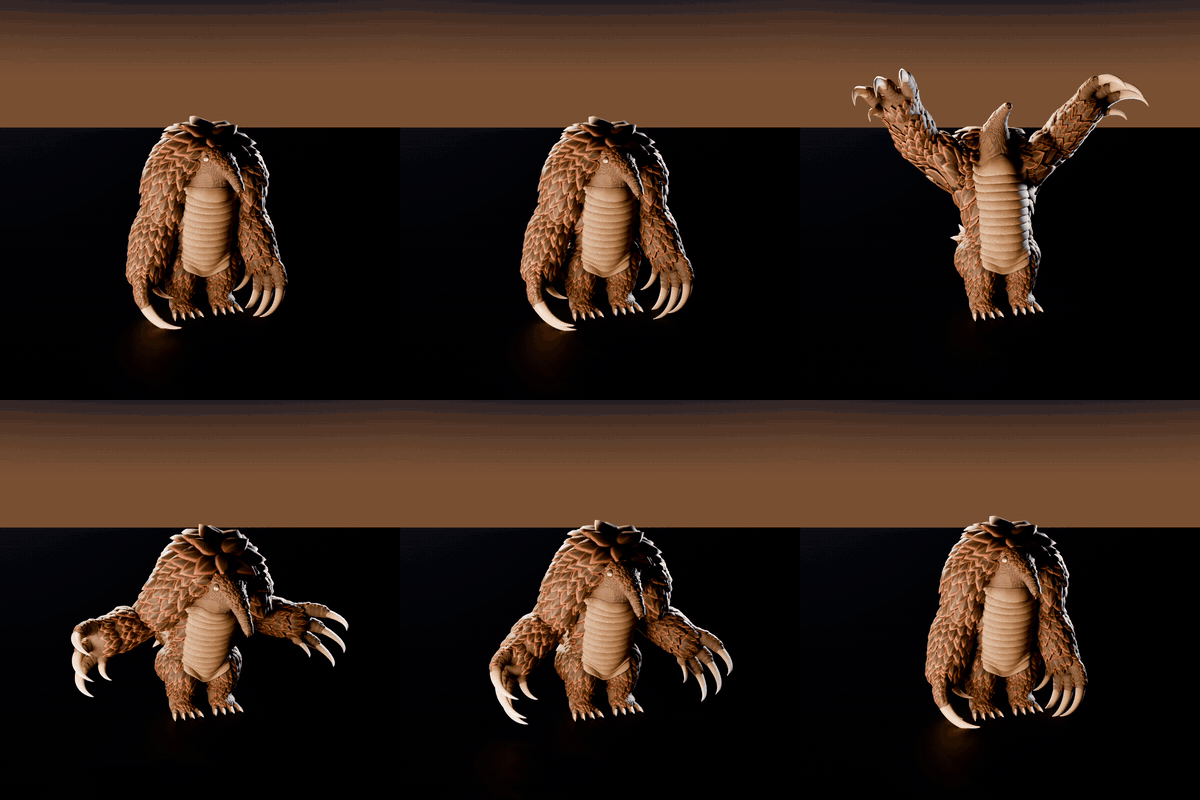 | 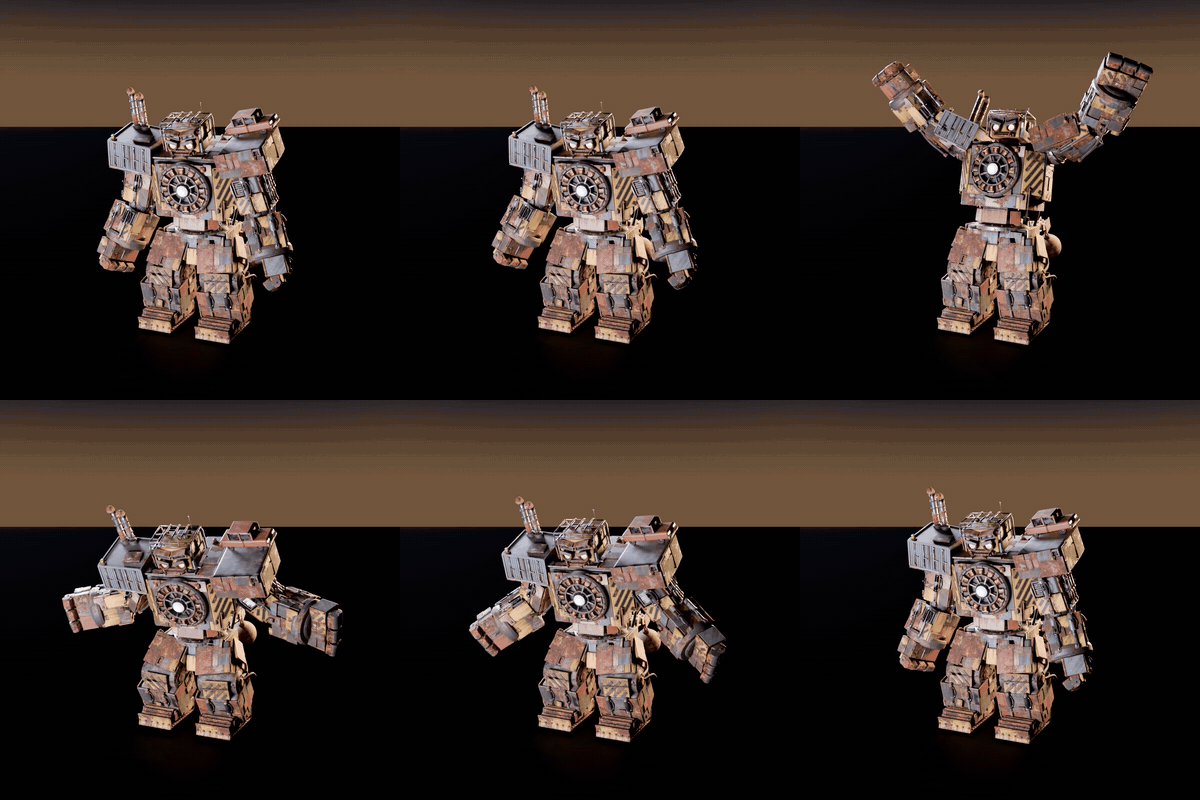 | 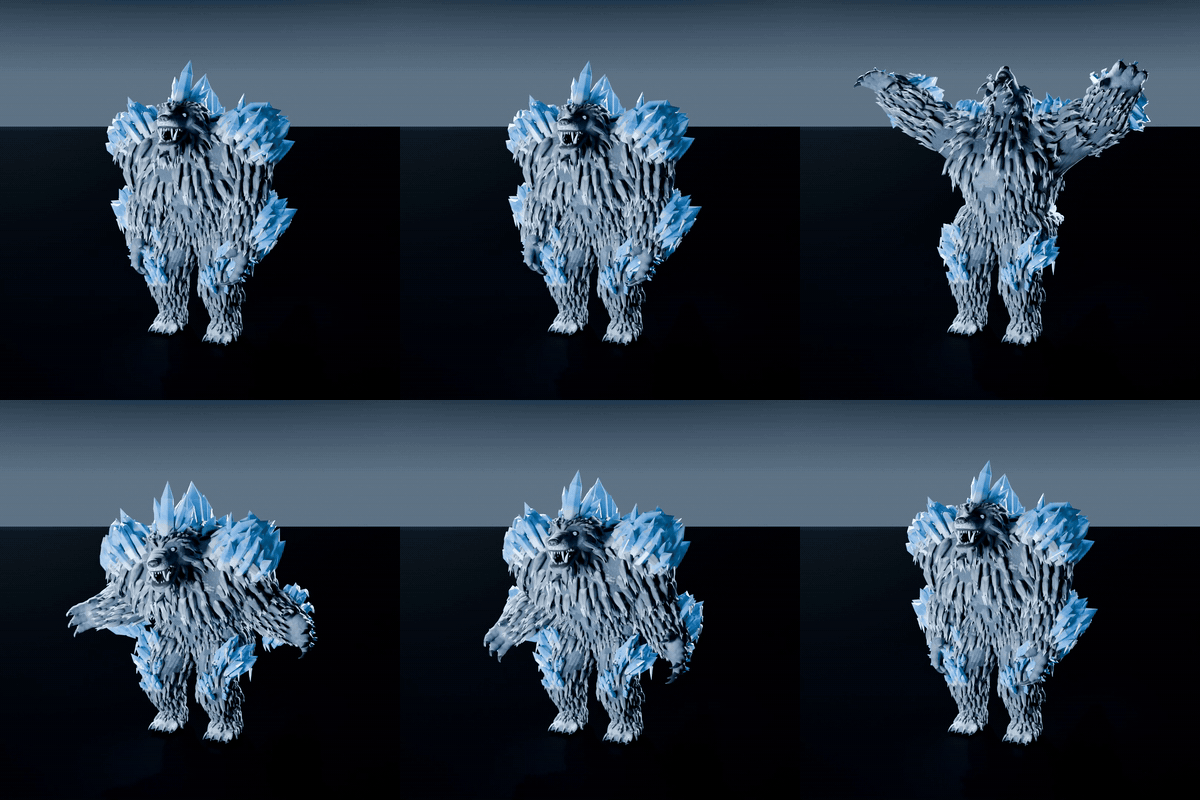 |
The roars are one shared clip on one shared 35-bone skeleton, keyed pose by pose with set_bone_pose and key_pose,
blended in from the idle on the NLA and rendered in Cycles with render_animation.
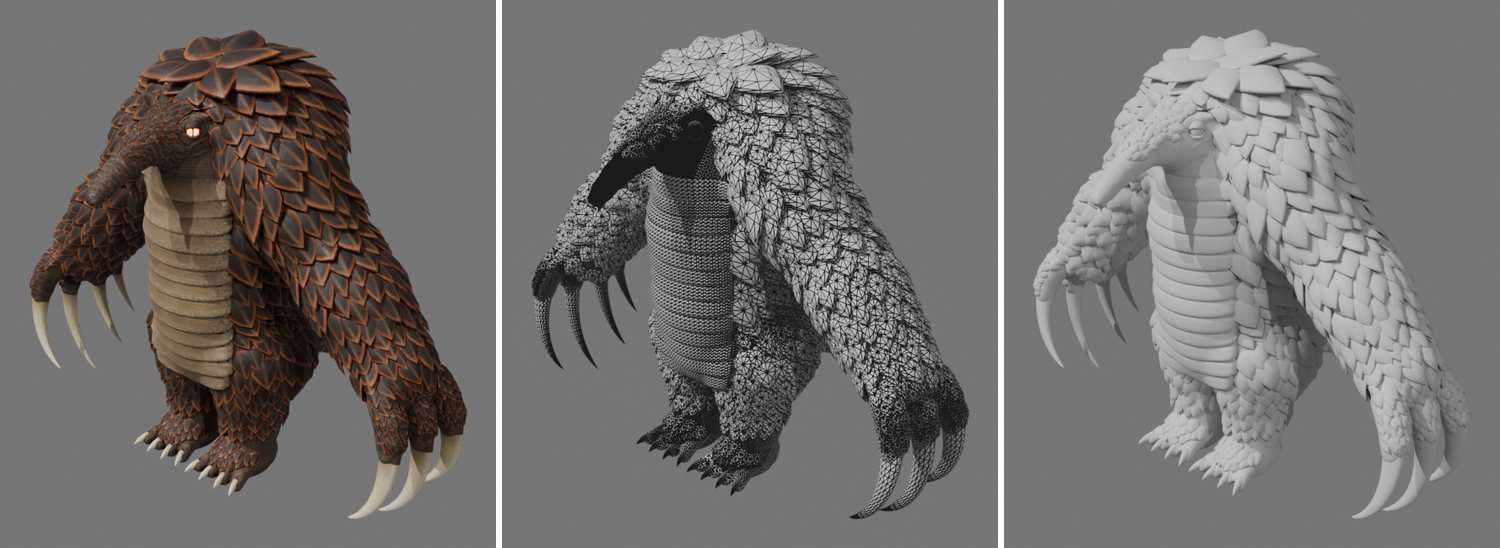
Pangoliath: 248,728 triangles, 35 bones, 7 materials on one 4K baked texture set. The body is a distance-field shape,
remeshed to quads with remesh_mesh. The plates, claws and their skin weights were placed in Python and built with
create_mesh. The surfaces are node graphs baked to albedo, normal, ORM and emissive maps with bake_texture_set.
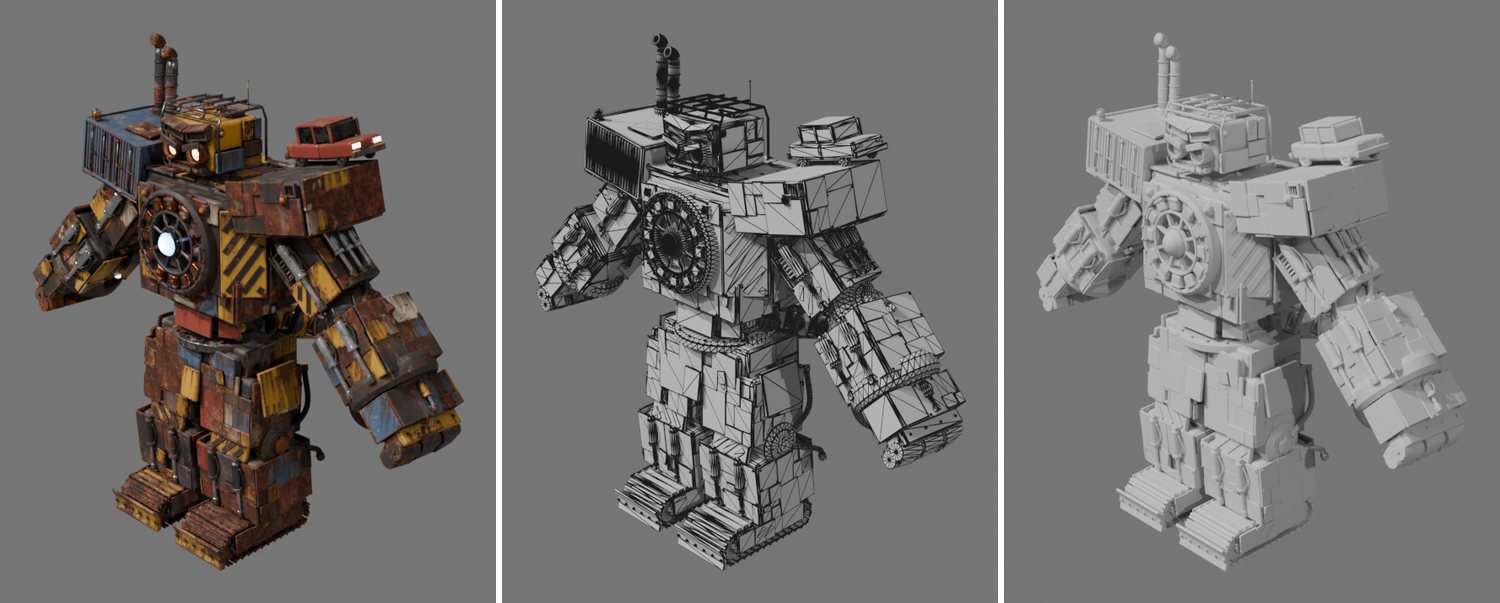
Rust Bucket: 268,356 triangles, 35 bones, 13 materials on one 4K baked texture set. A scrap mech of rigid plates, drums and rams, each part skinned whole to its bone. The chipped paint, rust and grime are node graphs baked to texture.
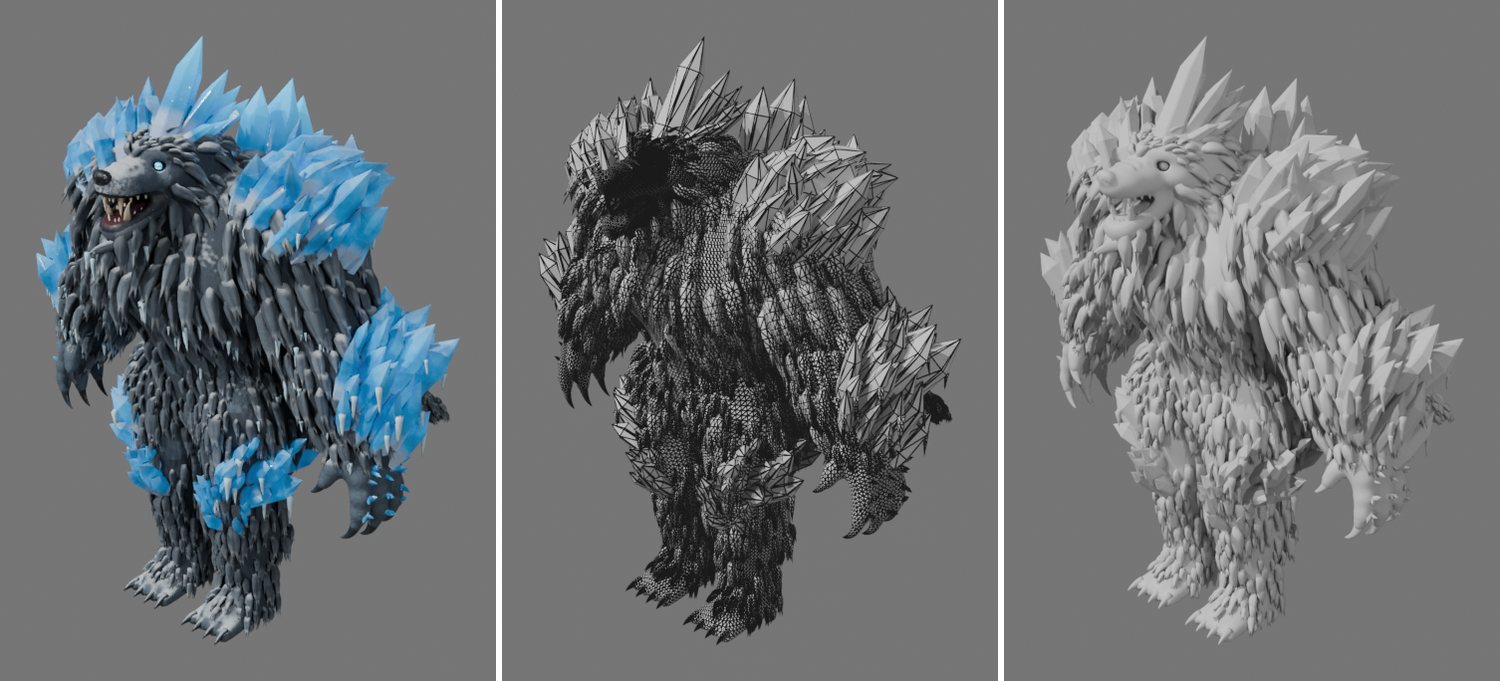
Frost Titan: 244,497 triangles, 35 bones, 7 materials on one 4K baked texture set. Built the same way as Pangoliath:
frozen fur clumps, icicles, ice armour and crystal horns placed on the body surface and built with create_mesh.
Vehicles, buildings and a tree
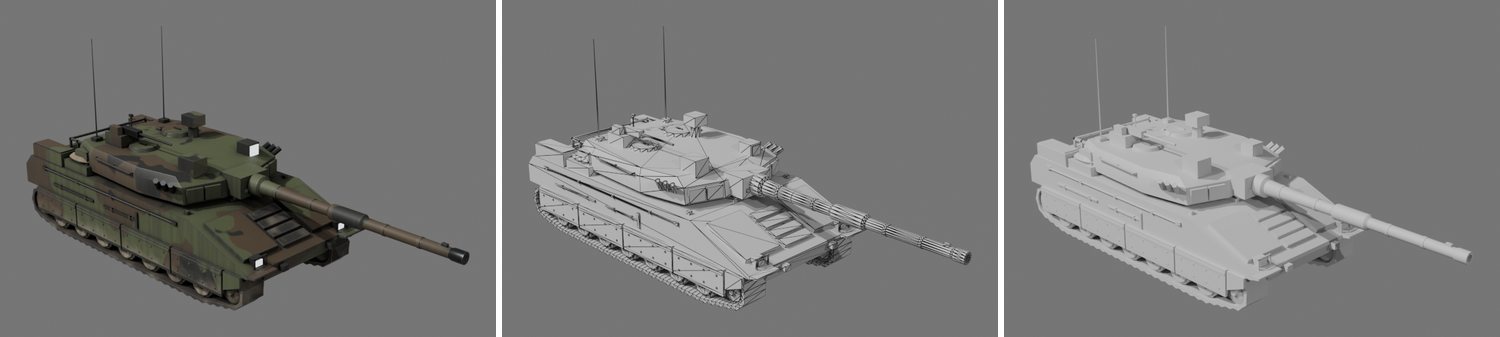
A fictional tank: 10,500 triangles, 4 materials, a turret and barrel on named sockets, a breakable version and a wreck. The camouflage, chipped edges, rain runs and mud are one 4K bake.

A brand-free taxi: 13,900 triangles, 6 materials. A body lofted through smooth profile curves with real wheel arches, three baked paint variants and a burnt-out wreck.
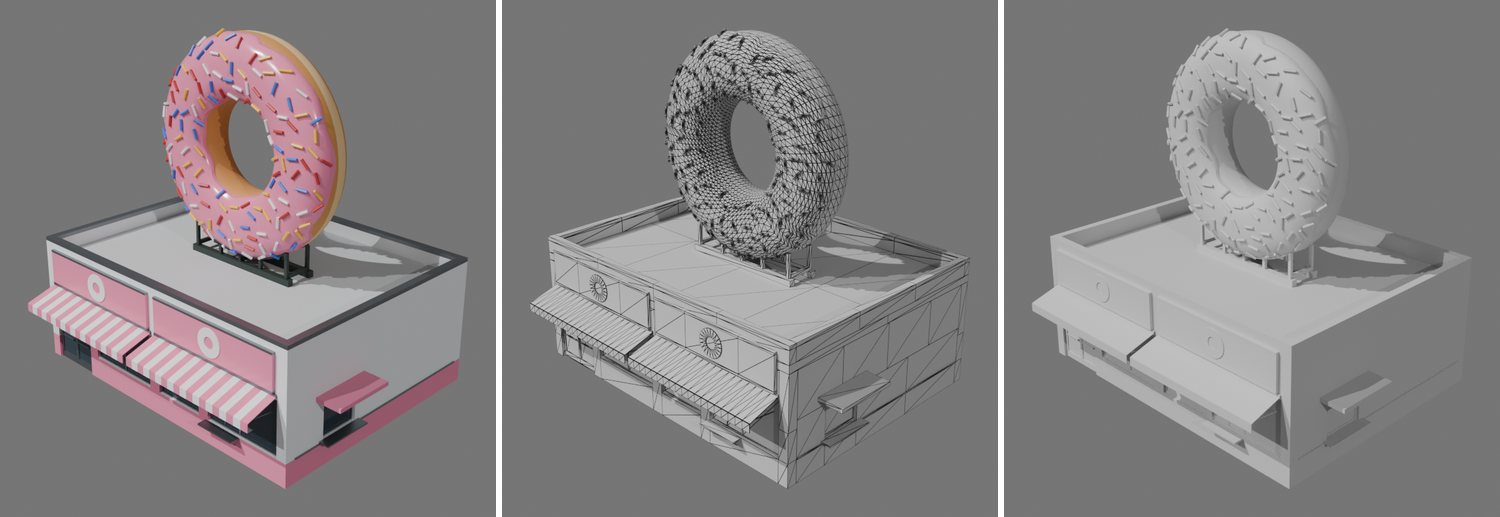
A donut shop: 18,024 triangles in 86 breakable pieces. The 8 m sprinkled donut on the roof is its own rolling prop.
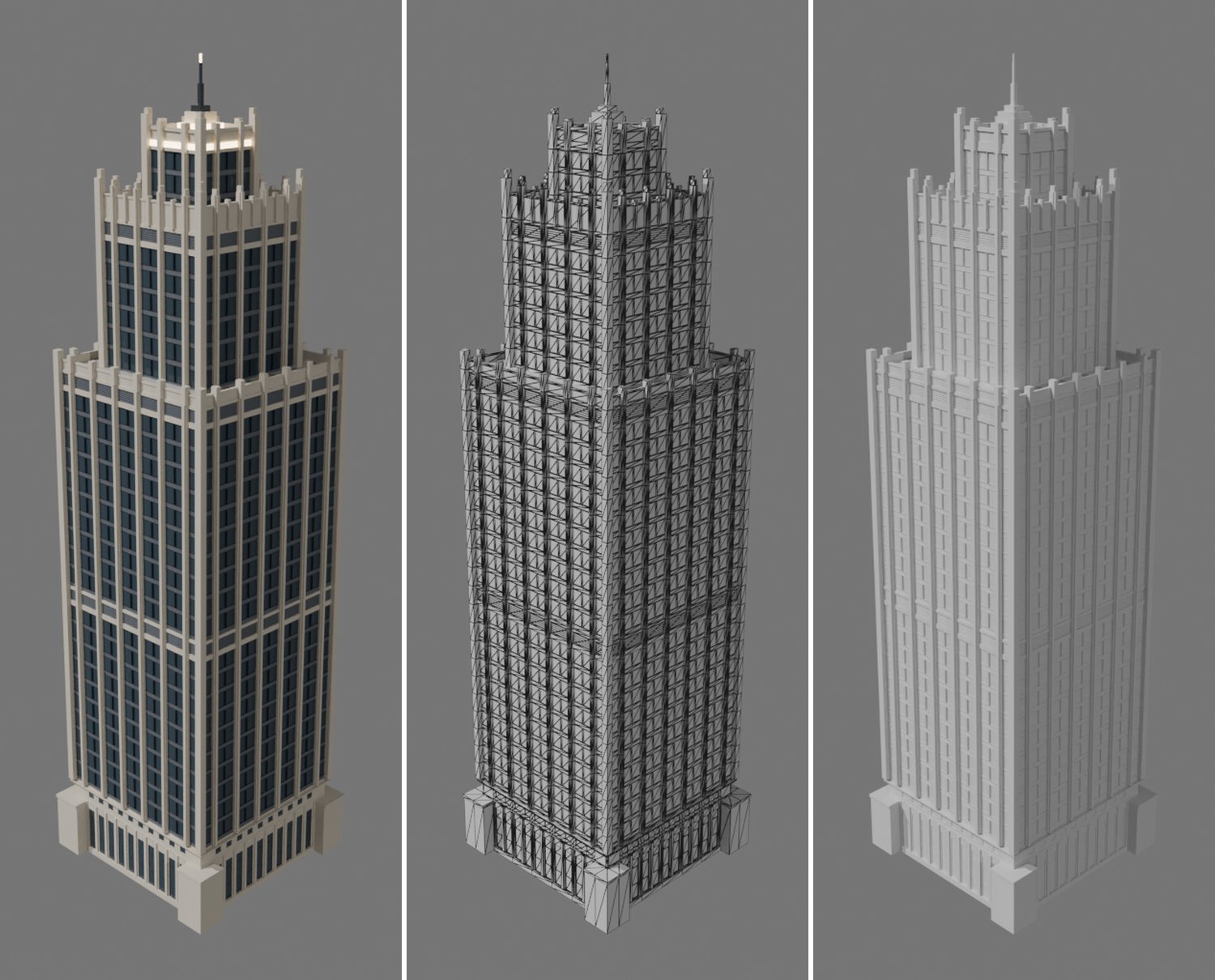
A bank tower: 160 m tall, 119,044 triangles in 1,863 separate pieces so it can come down piece by piece: a stone podium with a colonnade, stone piers between glass bays, two setbacks and a stepped crown.
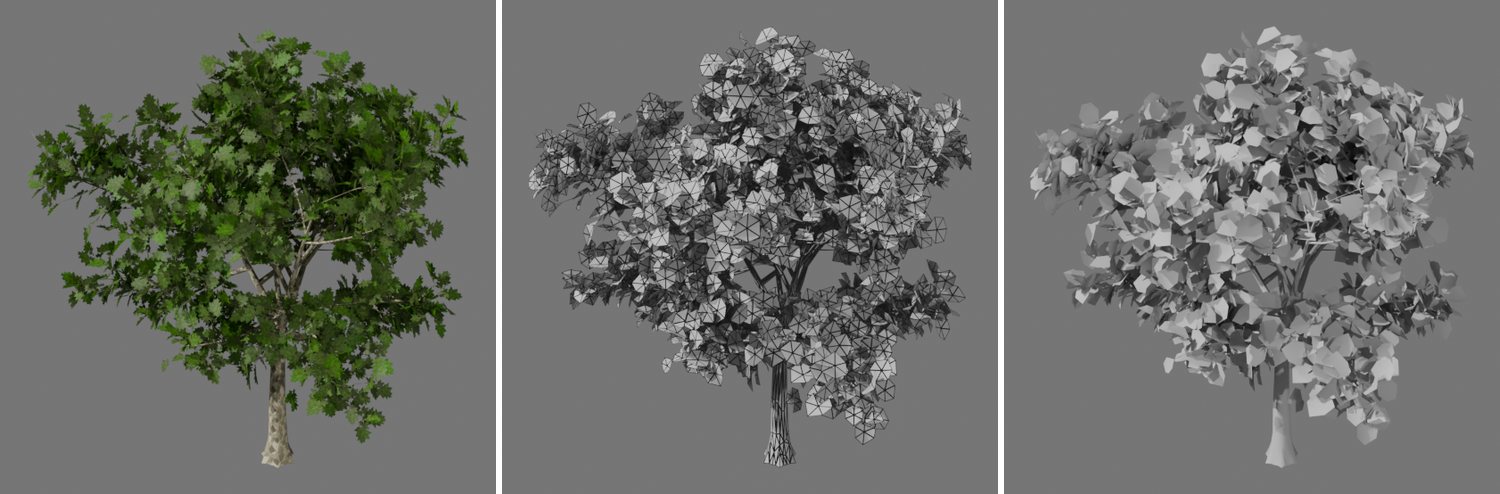
A street tree: a London plane grown with MifBlender's own build_tree, 30,199 triangles with three lower LODs down to
1,840, bark and leaf cards, and wind weights in the vertex colours. The bark is a node graph baked to maps, and the leaf
cards are drawn from each species' leaf outline.
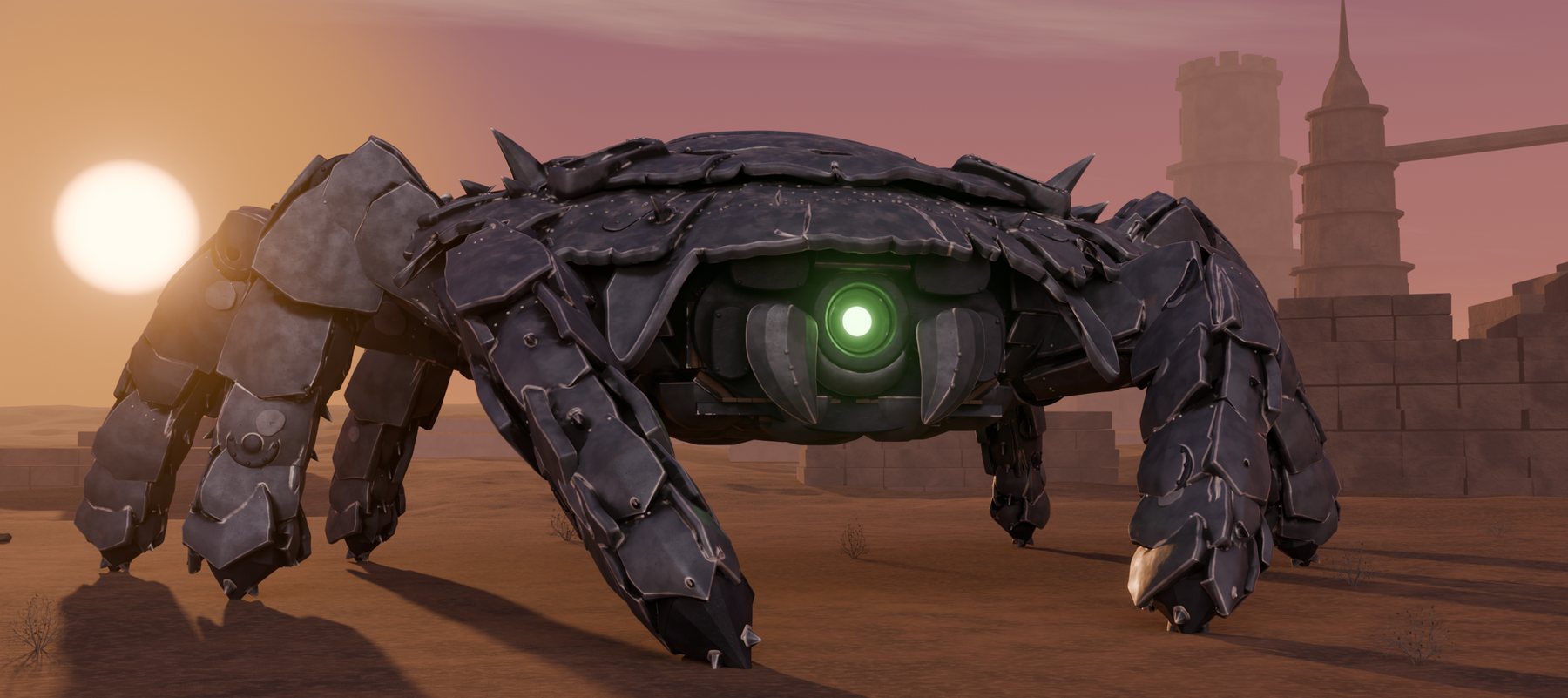
The crab walker
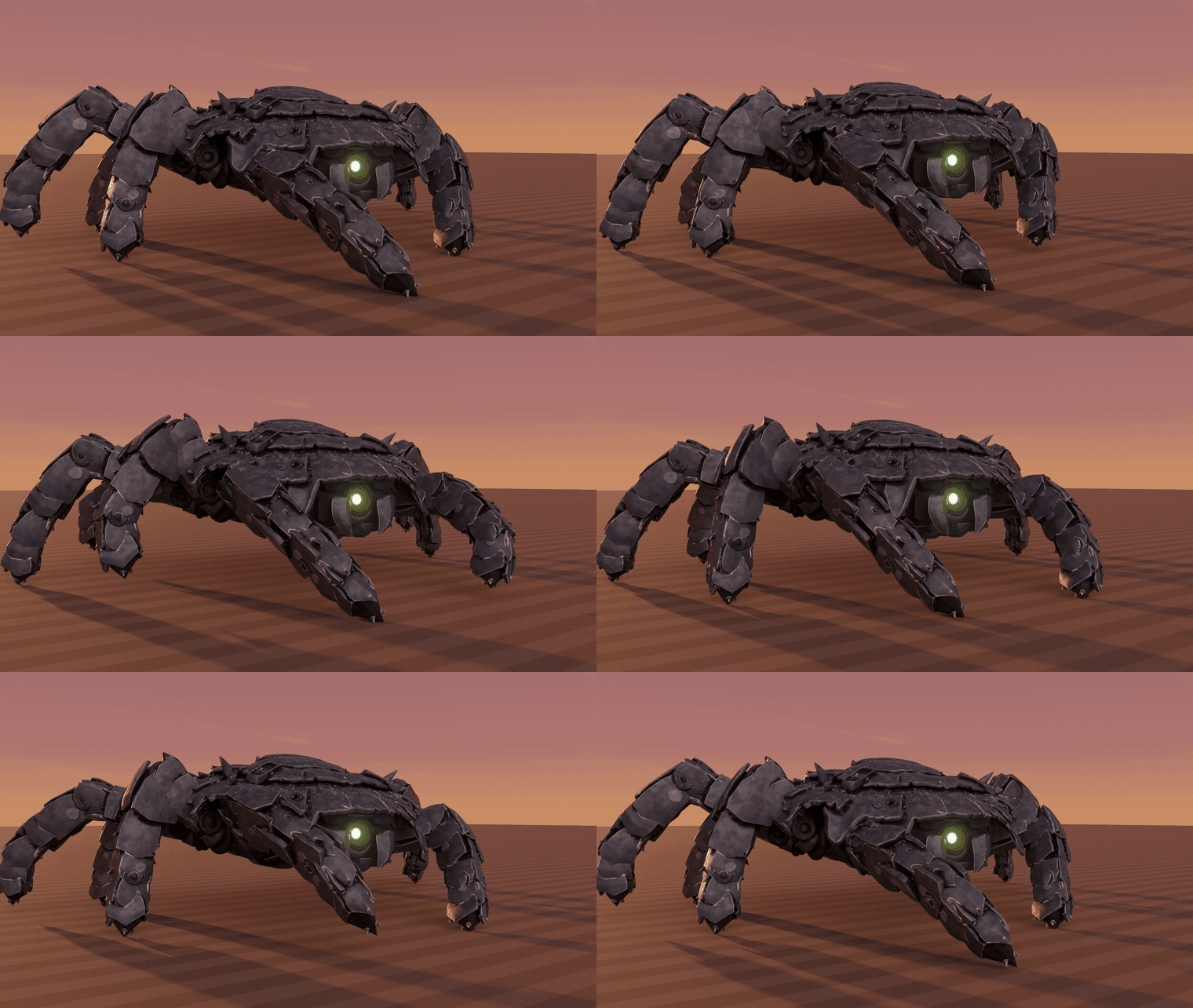
The crab walker: 515 pieces, an interior, a rig and a walk cycle, built with these tools in a long, guided session.
| The form, in clay | The topology |
|---|---|
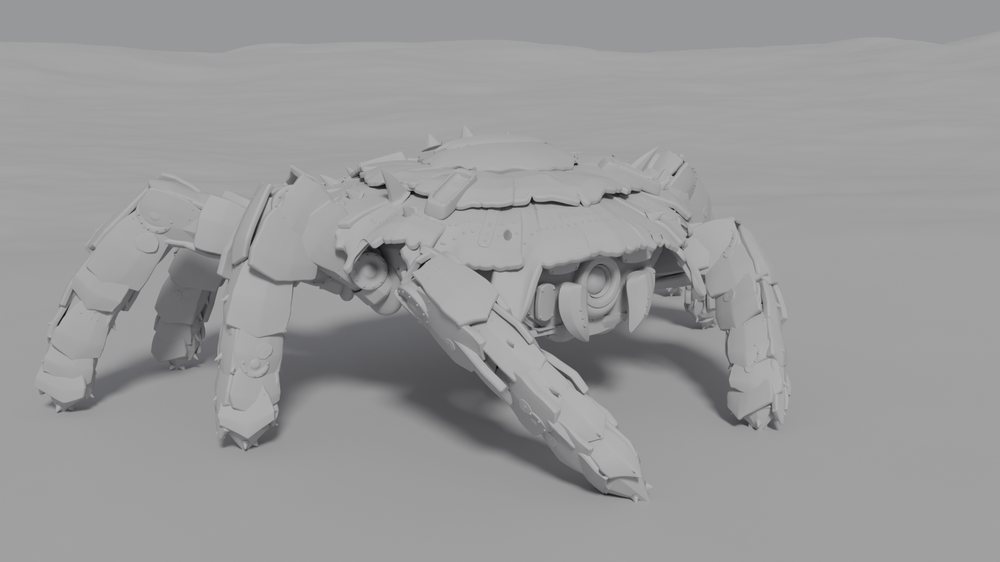 | 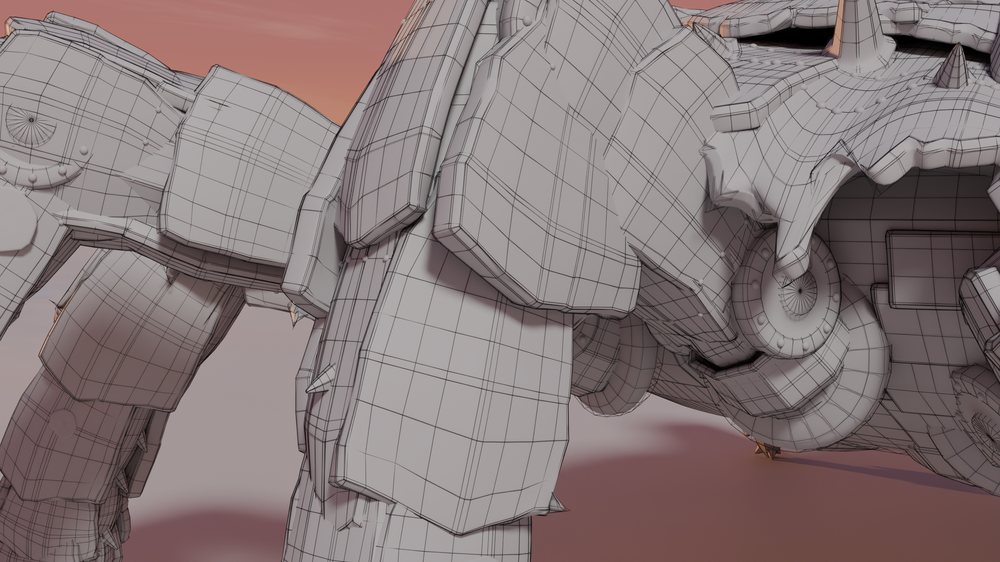 |
| The cabin | Every angle |
|---|---|
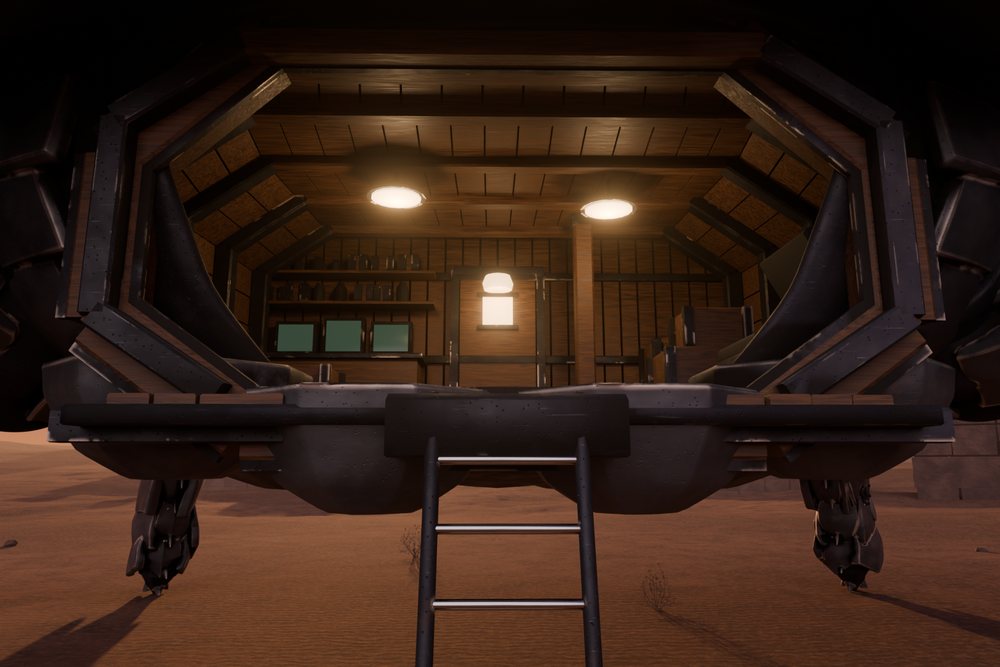 | 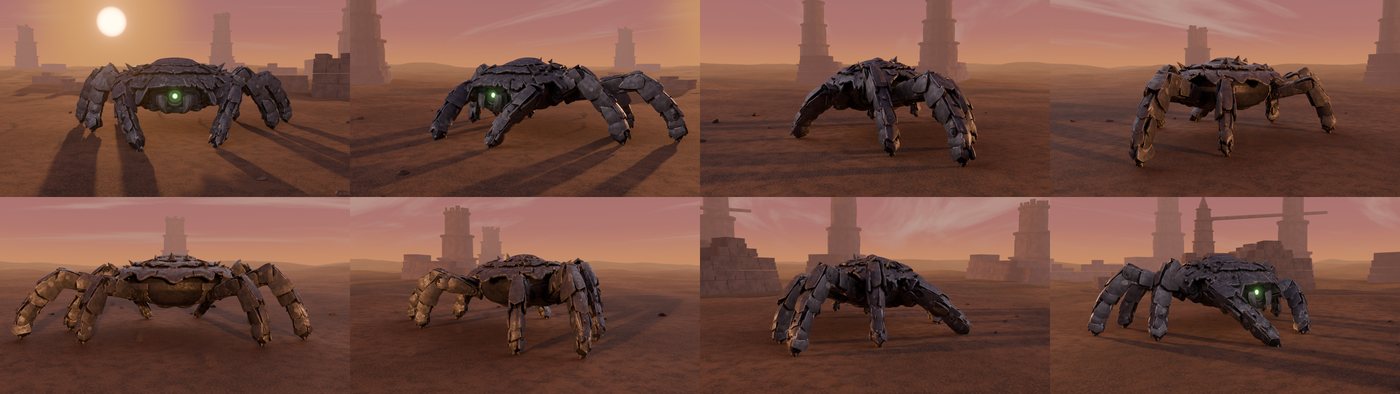 |
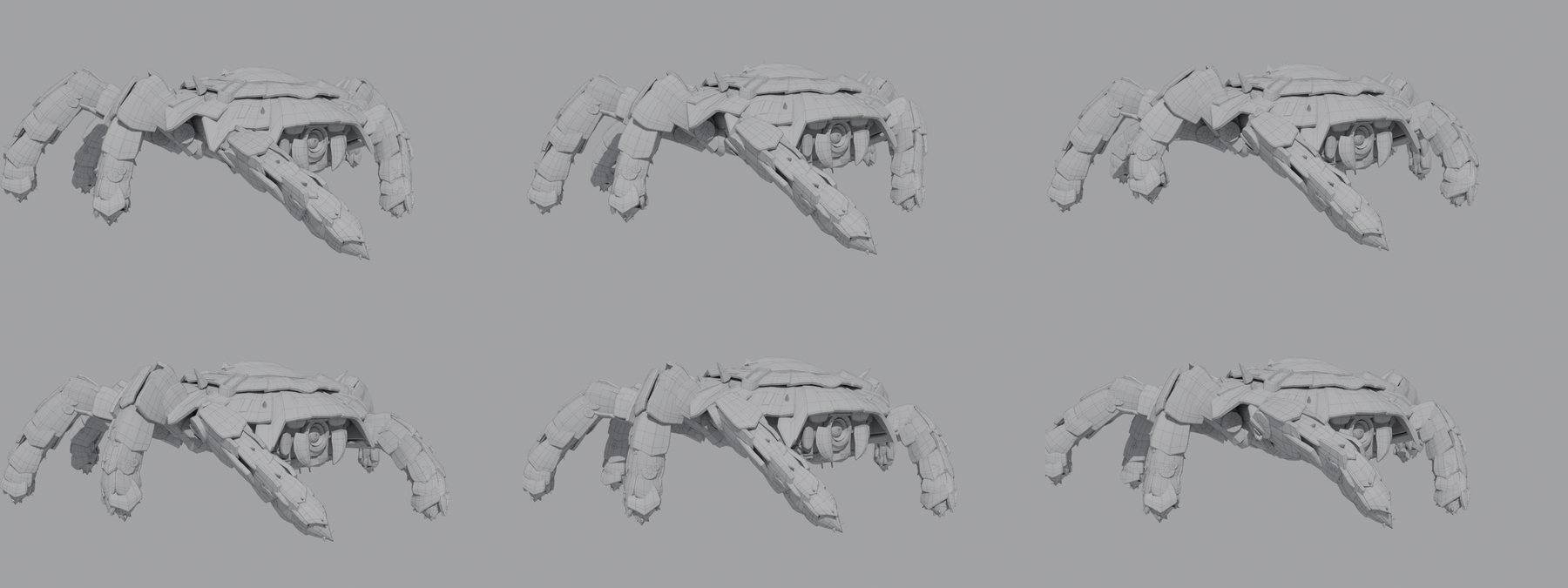
What it cost: $58.35 for one long session that built the model, rig, walk, bakes, video and packaging, run by Claude Opus 5.5 through Claude Code (prices below).
| Part | Cost | Why |
|---|---|---|
| Cache reads | $27.23 | 136.15M tokens. One long session rereads more each step as it grows. |
| Cache writes | $22.62 | 4.52M tokens, all at the 5 minute rate. Saving each step, plus whole rewrites after a few waits that outlasted the 5 minute cache. |
| Output | $8.50 | 424,813 tokens: the scripts, the tool calls and the reasoning. |
From images to a model
The creature was built from one six-view character sheet in eight staged sessions, from blockout to a rigged walk. Each
session started fresh, with only the saved file and a running journal to go on, and every round was checked against the sheet
with bl_compare_to_reference.
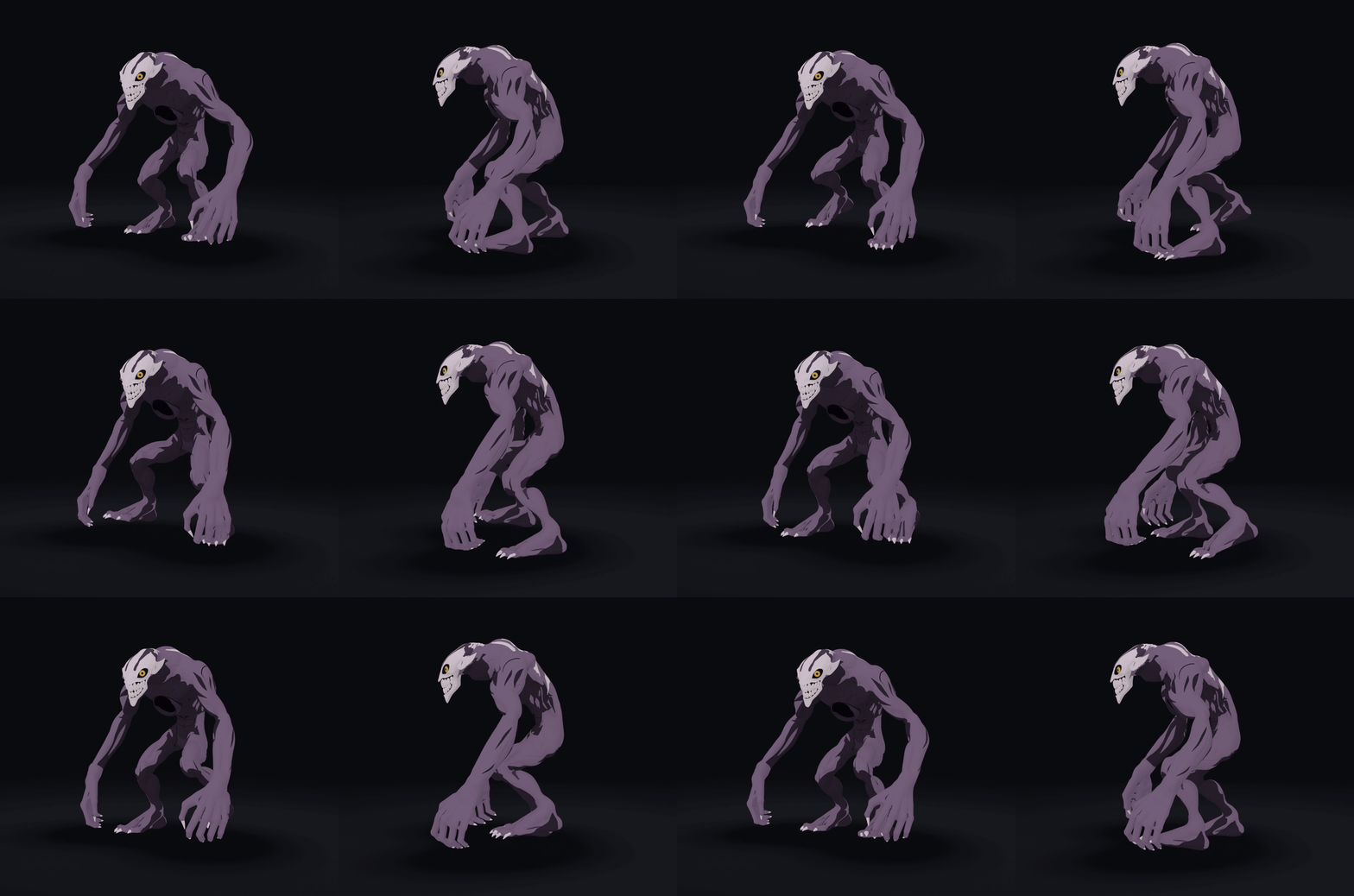
The finished model: 910,104 vertices with a painted tone on each vertex, and a 77-bone rig with IK on the arms and legs. In the walk loop, rendered in Cycles, the planted feet slide at most 1.9 mm per frame, the last frame matches the first exactly, and the claws stay within 0.008 mm of the fingers.
| Reference and model | The face |
|---|---|
 |  |
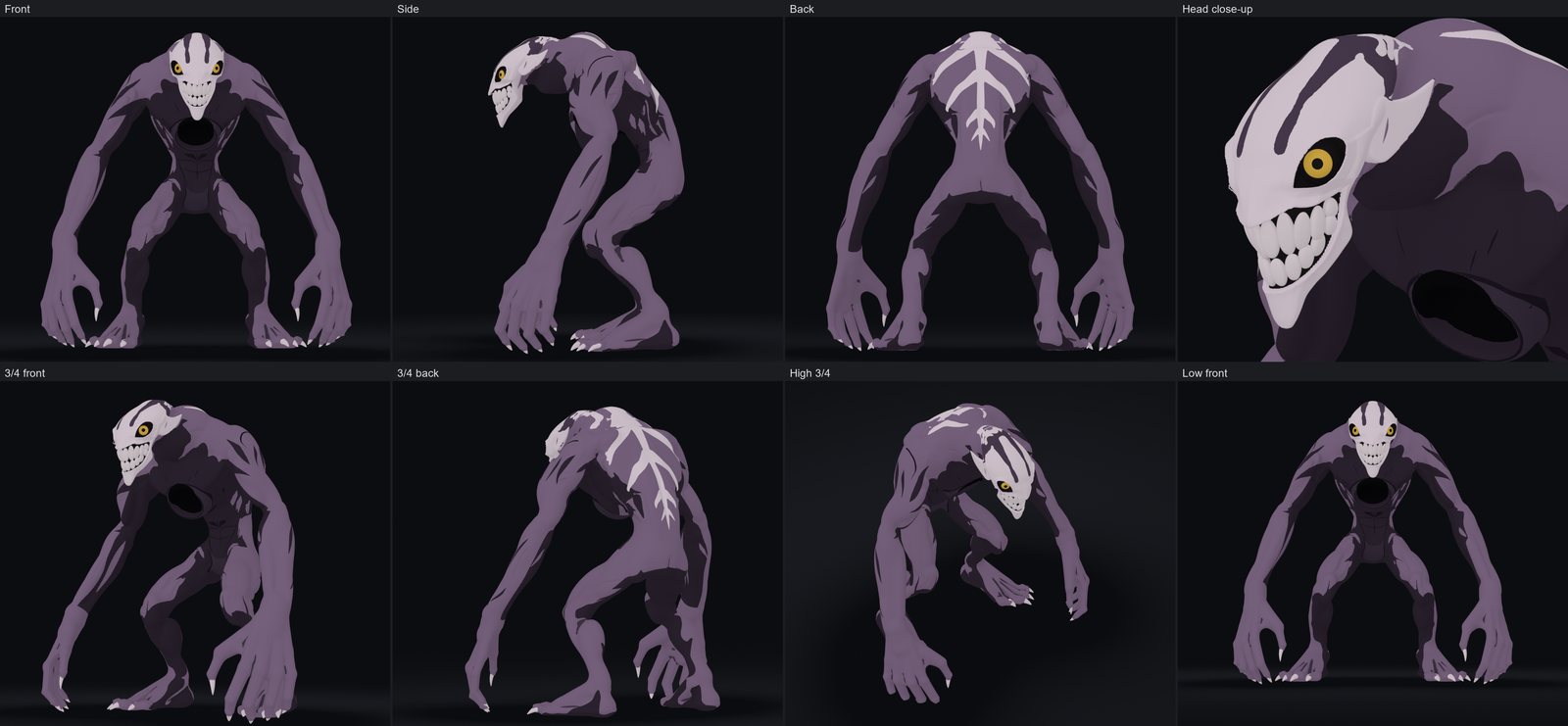
What it cost: $91.72 for eight staged sessions that built the model, paint, 77-bone rig and walk, run by Claude Opus 5.5 through Claude Code.
| Part | Cost | Why |
|---|---|---|
| Output | $44.30 | 2.22M tokens: the model's own writing, meaning the scripts that built each part, the tool calls and its reasoning at high effort. The biggest share, because output is the most expensive token. |
| Cache writes | $30.98 | 3.38M tokens at the 1 hour rate ($27.04) and 0.79M at the 5 minute rate ($3.94): saving each new step so the next one can reread it cheaply. The first six stages used the 1 hour rate and turned out not to need it; the last two used the cheaper 5 minute cache. |
| Cache reads | $16.11 | 80.57M tokens: every step rereads the whole session so far, tools, notes and render images included. Millions of tokens, but at a tenth of the input price. |
| Uncached input | $0.32 |
Prices: both builds ran on Claude Opus 5.5, through Claude Code. Costs are at API list price, from Claude Code's own price table: input $4, output $20, cache read $0.20, cache write $5 (5 minute) or $8 (1 hour), per million tokens. On a Claude subscription plan, the same work uses the plan's allowance instead of extra money.
What the build taught:
- A good score is not a good look. The outline matched the sheet at .88 to .90 while the body still read as a balloon. Numbers catch the shape, and someone still has to look at the picture.
- Stop when the rounds stop helping. When the scores had been flat for half an hour, more rounds bought nothing, so the work moved to the next stage.
- Reference views can disagree. On a painted sheet, the 3/4 views did not match the front, side and back, so the build held to those three.
- Honest numbers can fall. Real fingers scored lower than the mitts they replaced, because the mitts had covered the painting by accident. Silhouette fit after the surface stage: front .85, side .89, back .84.
- A dense mesh needs another way to weight. Blender's heat weighting failed on a mesh this size, so the weights were computed from capsules around each bone instead.
One prompt, one model
Each of these was built from the one prompt under it:
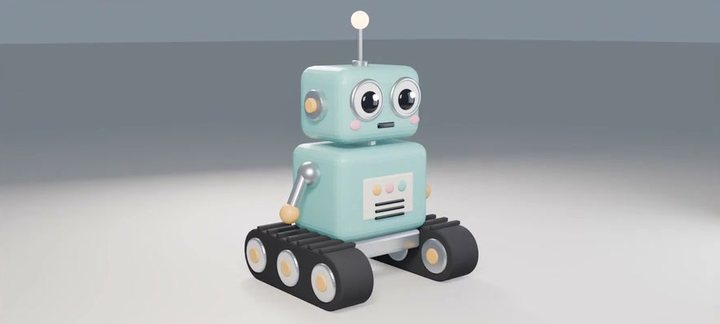 "Model a cute boxy robot with antenna, round eyes and tank treads, lit for a nice render." | 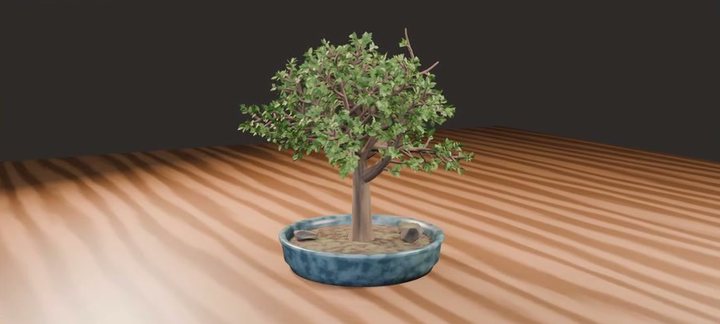 "Model a bonsai tree in a shallow ceramic pot with a few small rocks, lit for a nice render." |
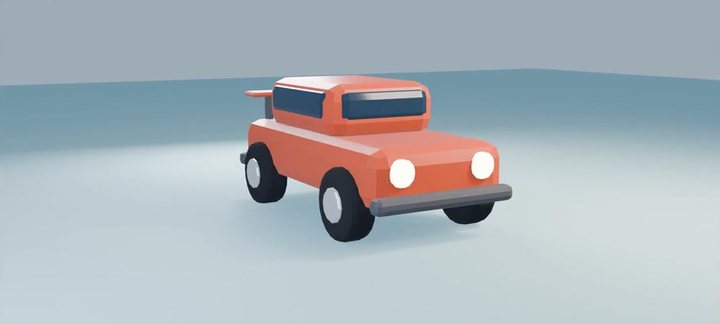 "Model a low-poly cartoon car with round wheels, headlights and a little spoiler, lit for a nice render." | 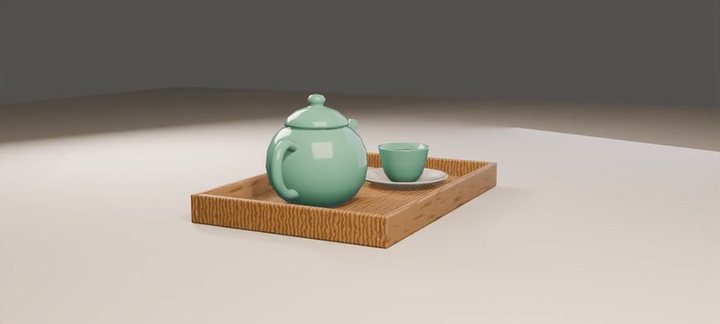 "Model a cute ceramic teapot with a cup and saucer on a small wooden tray, lit for a nice render." |
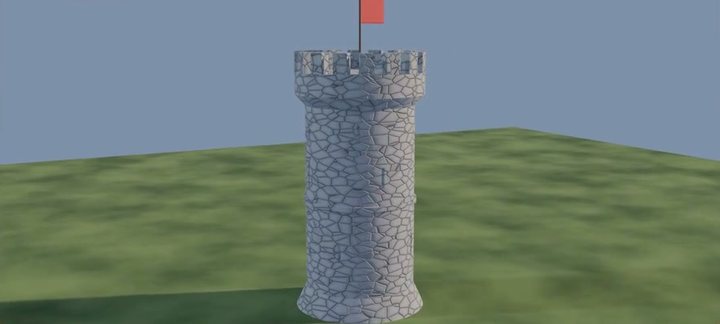 "Model a stone castle tower with battlements, arrow slits and a flag on top, lit for a nice render." | 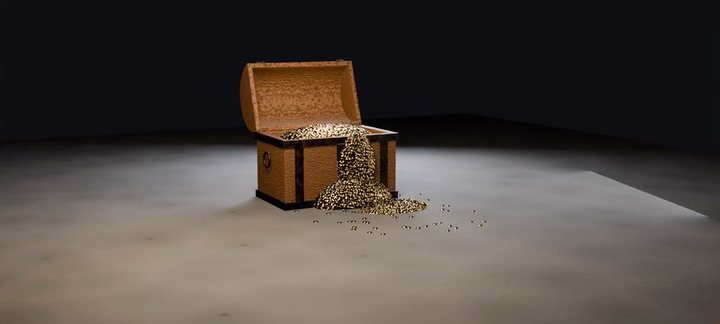 "Model a wooden treasure chest with iron bands, its lid open, and gold coins spilling out, lit for a nice render." |
Simulation, shading and scale
Scripted scenes, each built entirely from typed calls:
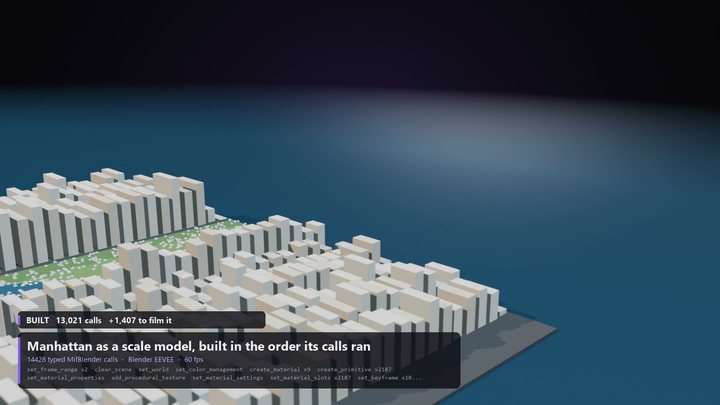 Manhattan as a scale model | 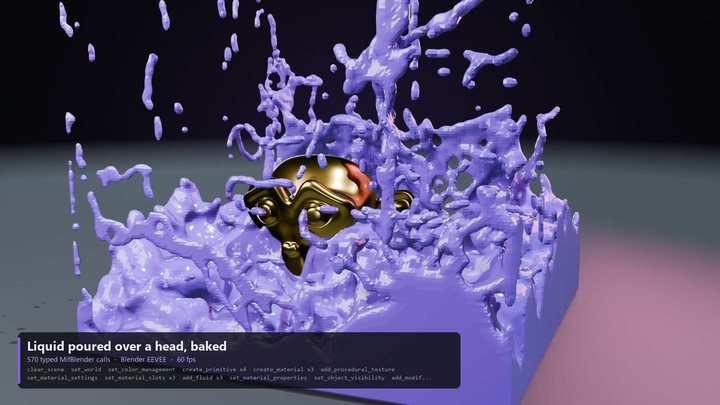 A baked liquid sim | 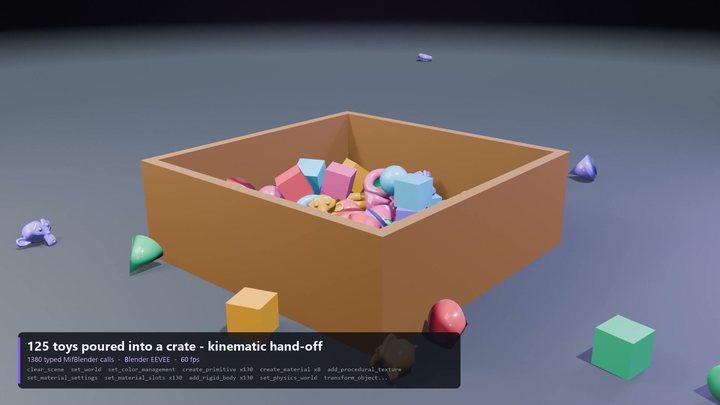 125 rigid bodies |
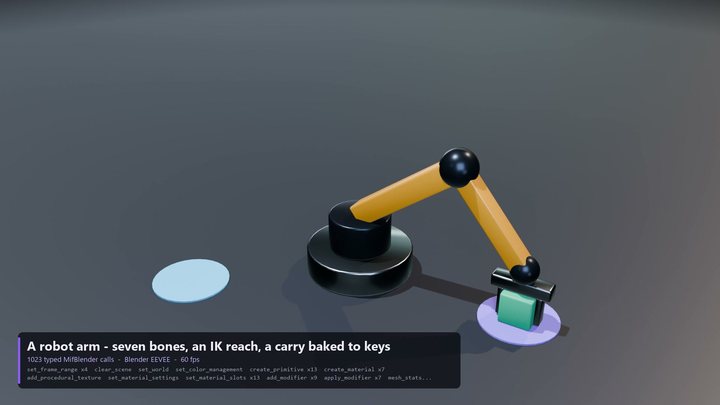 IK with a baked carry | 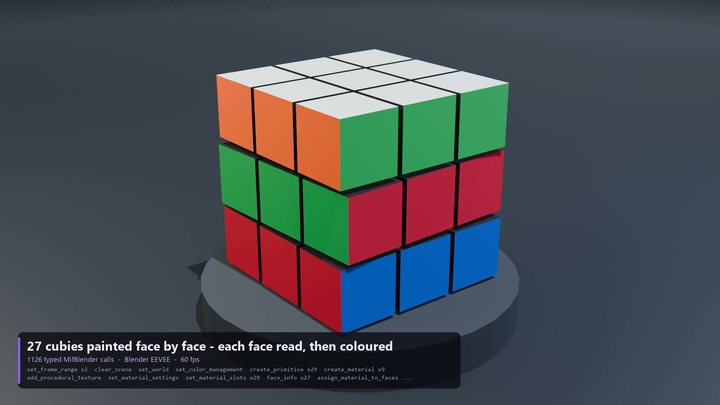 27 cubies, painted face by face | 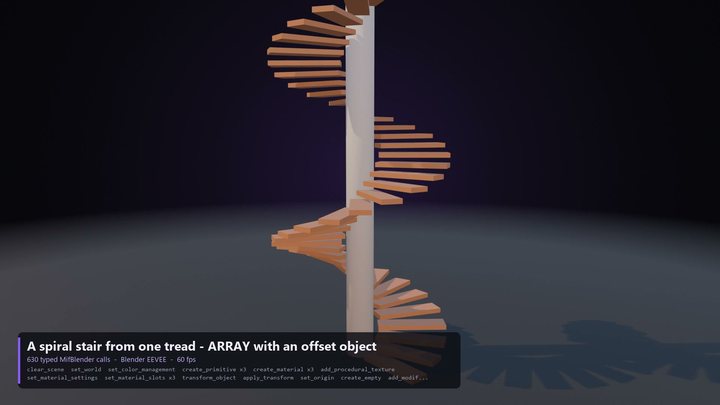 A spiral stair from one tread |
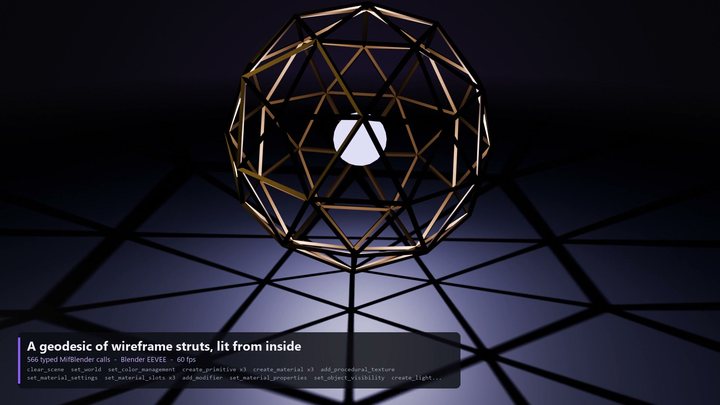 A geodesic lit from inside |  30,000 hairs from one call | 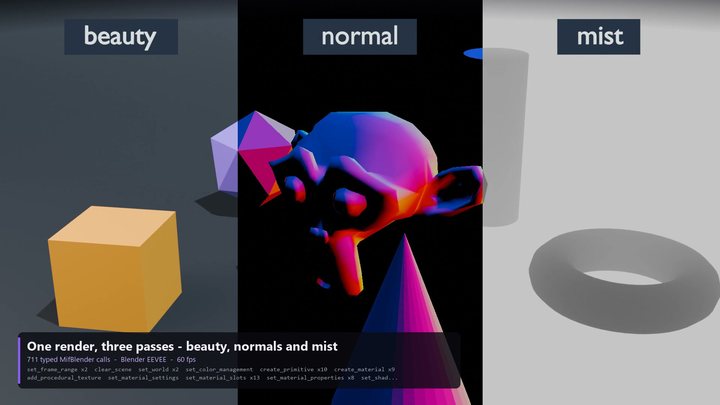 Render passes |
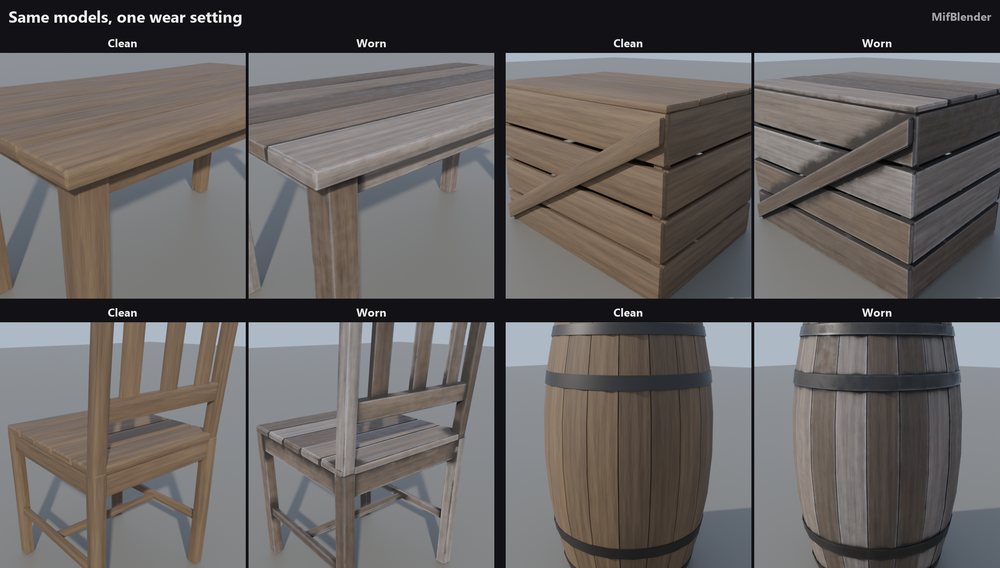
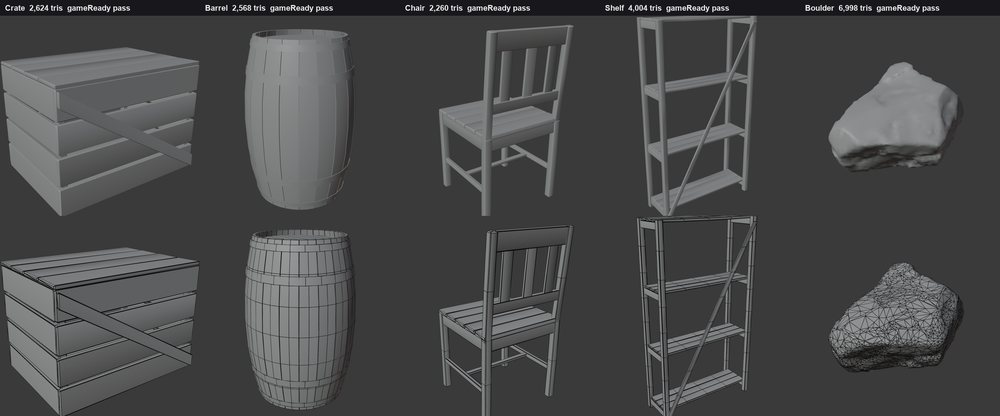
Game props
| Clean to worn, from one setting | Topology you can check |
|---|---|
 |  |
What is in it
| Area | Examples |
|---|---|
| Modeling | primitives, mesh editing, bevels, booleans, modular kit pieces, rocks and trees built by rule |
| Materials and UVs | shader node graphs, texture sets, baking, unwrapping |
| Rigging and animation | armatures, Rigify, poses, keyframes, walk cycles |
| Simulation | rigid bodies, cloth, particles, geometry nodes |
| Rendering | lights, cameras, Cycles and EEVEE stills and sequences, compositing |
| Checking | mesh quality reports, comparing a render to a reference image, reading results back |
A lean default sends only find_tools, mif_call and run_python up front and finds the rest on demand, so a long session
stays small. Set MIF_TOOL_PACKS=blender to load all 437 tools, or name the packs you want; there are 14.
AI apps
setup knows Claude Code, Claude Desktop, Cursor, Windsurf, VS Code and Codex. For any other MCP client, start this as a stdio
server:
uvx mifblender-mcp
Useful setup options: --dry-run shows the plan and changes nothing, --check reports what is set up, --upgrade moves the
add-on and the apps to this version together, and --uninstall removes them. If several Blenders are found, it asks which.
Settings
Set these in the client's env block when you need them:
| variable | default | |
|---|---|---|
MIF_BLENDER_PORT | 8792 | the port the add-on listens on |
MIF_BLENDER_TOKEN | set by setup | must match the add-on's Token preference |
MIF_TOOL_PACKS | lean | lean, blender, or a list of packs |
MIF_BLENDER_TIMEOUT | 180 | seconds one call may take |
Safety
- Everything stays on your computer. The add-on listens on
127.0.0.1only, andsetupgenerates a private token that links it to your AI apps. Neither makes any network call of its own. run_pythonis on by default and runs any Python inside Blender. Untick Allow run_python in the add-on's preferences to limit the assistant to the typed tools.- The
bl_gen_*tools are generative: they send a prompt to a ComfyUI you run yourself, and do nothing without one. Every other tool builds from explicit parameters. SetMIF_GENERATIVE=off, or untick Allow generative tools, to switch them off.
Tested on
Blender 3.6.23, 4.2.17, 4.4.0, 5.0.1 and 5.2.1, on Windows. macOS and Linux have not been tested yet; reports are welcome.
License
Free, source available. The add-on is MIT. The server is free for any use, including commercial work, and you may share it unchanged through the channels its license names; you may not sell it or publish changed copies. It is not an open source license. See LICENSE.txt. Some comments cite internal documents that are not published.
MifBridge
MifBlender is the Blender half of MifBridge, a paid product that adds Unreal Engine 5.3 to 5.8 and the tools that move models between the two. MifBlender stands on its own and needs neither.
Questions and bug reports: open an issue.
mifblender-mcppip install mifblender-mcp